 celldiagram.world
Biology · Cell Type
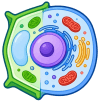
Eukaryotic Cell Diagram
A eukaryotic cell keeps DNA inside a nucleus and divides complex jobs among membrane-bound organelles.
Interactive vector diagram — click a part, hide labels, or download a 300 DPI PNG / editable SVG.
Diagram labels and functions
| Structure / stage | Function |
|---|---|
| Cell membrane | Controls movement into and out of the cell. |
| Cytoplasm | Fluid where many chemical reactions take place. |
| Nucleus | Stores DNA and coordinates cell activity. |
| Mitochondrion | Transfers energy from respiration into ATP. |
| Ribosome | Builds proteins from amino acids. |
| Golgi apparatus | Modifies, sorts and packages proteins. |
Features of a eukaryotic cell
Eukaryotic cells are larger and more compartmentalized than prokaryotes. Animals, plants, fungi and protists all belong to this cell type.
Eukaryotic versus prokaryotic
Both have DNA, ribosomes, cytoplasm and a membrane, but only eukaryotes have a nucleus, mitochondria, ER and Golgi apparatus.
Related diagrams
Frequently Asked Questions
What is a eukaryotic cell?
A cell whose DNA is enclosed in a nucleus and that usually contains membrane-bound organelles.
Are plant and animal cells eukaryotic?
Yes. Both have nuclei and membrane-bound organelles.
What is absent from a prokaryotic cell?
A membrane-bound nucleus and organelles such as mitochondria and Golgi apparatus.
Search terms covered by this page
eukaryotic cell diagram · cell eukaryotic diagram