 celldiagram.world
Biology · Organelle Index
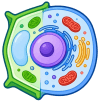
Cell Organelles Diagram
Cell organelles are specialized structures that divide the work of a eukaryotic cell. Select an organelle to learn its job or open a detailed diagram.
Interactive vector diagram — click a part, hide labels, or download a 300 DPI PNG / editable SVG.
Diagram labels and functions
| Structure / stage | Function |
|---|---|
| Nucleus | Stores DNA and controls gene expression. |
| Cell membrane | Selective boundary around the cell. |
| Mitochondria | Release usable energy through respiration. |
| Ribosomes | Assemble proteins. |
| Golgi apparatus | Processes and ships cell products. |
| Cell wall | Rigid support outside some cells. |
Parts of a cell diagram
The nucleus stores instructions, ribosomes build proteins, mitochondria transfer energy, membranes control movement and the Golgi apparatus packages materials. Plant cells also add a cell wall, chloroplasts and a large vacuole.
Why organelles work as a system
No organelle works alone. DNA instructions leave the nucleus, ribosomes build the protein, the endoplasmic reticulum folds it, and the Golgi apparatus modifies and ships it.
Related diagrams
Frequently Asked Questions
What are cell organelles?
They are specialized structures inside a cell, each carrying out a particular job.
What parts should appear on a cell organelles diagram?
At minimum: nucleus, membrane, cytoplasm, mitochondria and ribosomes; detailed diagrams also include ER, Golgi apparatus and lysosomes.
Are all organelles membrane-bound?
No. Ribosomes are organelles without a surrounding membrane.
Search terms covered by this page
cell parts on the diagram · cell organelles diagram · parts of a cell diagram